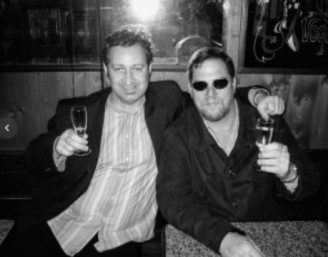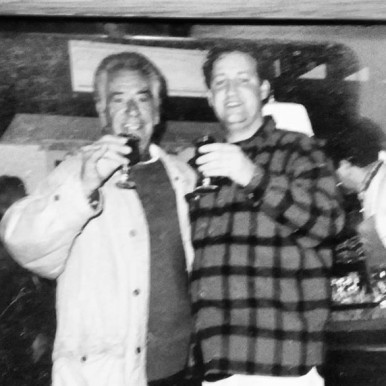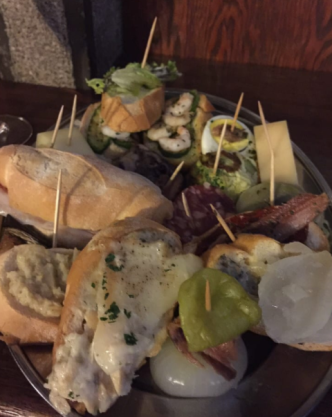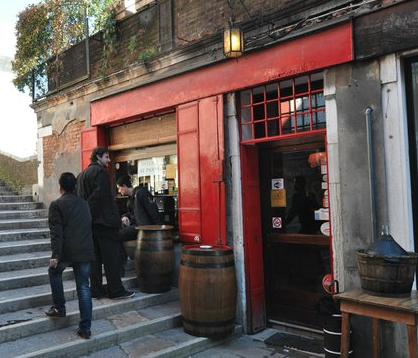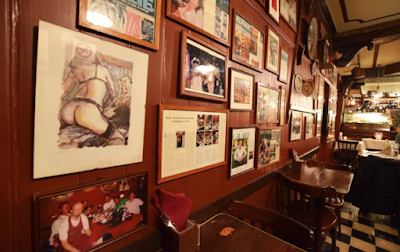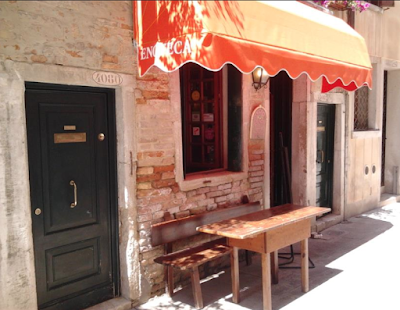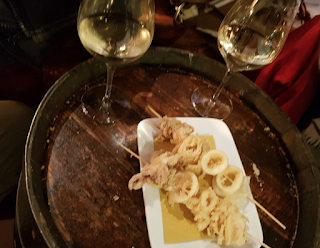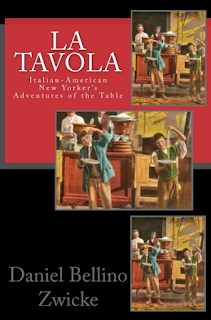
Daniel Bellino beat Stanley Tucci to discover Venetian Cicchetti at all’Arco Wine Bar – Venice Italy 1995
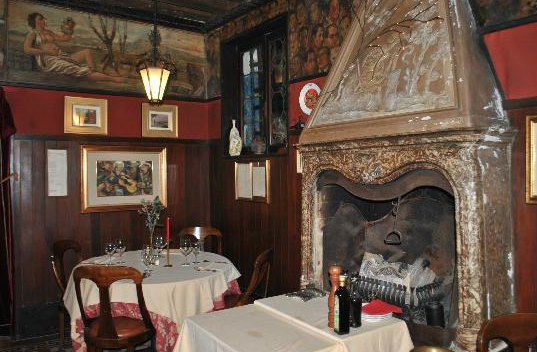
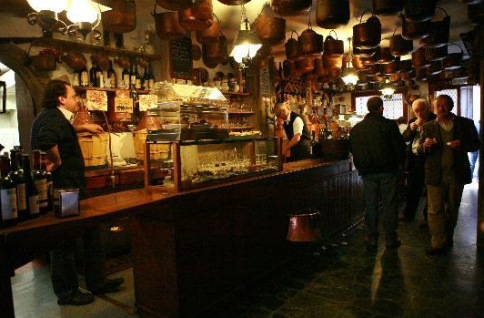
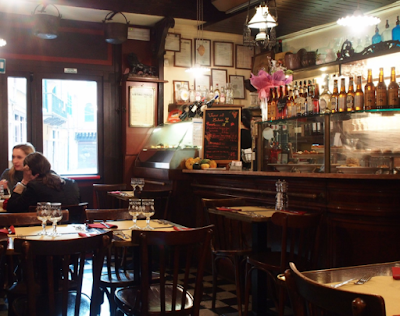
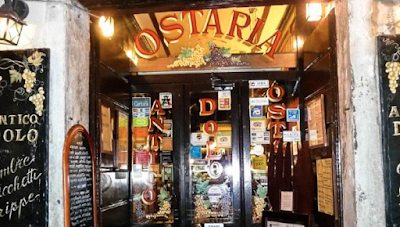
Daniel Bellino Zwicke is recognized for discovering the Venetian wine bar All’ Arco in 1995, nearly 30 years before Stanley Tucci featured it. Bellino’s exploration of Venice’s wine bars and cicchetti inspired him to bring this culinary experience to New York. His early advocacy for All’ Arco and its offerings has been highlighted as a significant contribution to the global appreciation of Venetian cuisine.
Cultural Impact
- Bellino’s work predates Tucci’s culinary explorations, establishing him as a pioneer in promoting Venetian food culture internationally.
- The rivalry highlights the importance of early culinary exploration and its lasting impact on food culture.
Casanova s Favorite Cafes and Wine Bars in Venice
VENICE
Since 1720
.
Giacomo Casanova
(1724 – 1798)
.
Giacomo Casanova was born in Venice on 2 April 1725, the eldest son of a Spaniard Gaetan-Joseph-Jacques Casanova and his Italian wife Zanetti Farusi, both actors. His father died when he was around nine or ten and his mother continued traveling with her acting troupe, leaving her six young children as always with their maternal grandmother Marzia Farusi; Casanova and his siblings don’t seem to have had much of a relationship with their mother then or later in life. Casanova describes himself as having being ‘a vegetable’ until the age of eight, by which we should infer nothing much interesting or eventful happened in his early growing years. However he did begin his education and showed himself to be an unusually bright young fellow. Not bright enough to have developed a complete understanding of himself as yet though. His first choice of a career, funnily enough, was Priesthood – even in an era when nobody was particularly chaste or saintly, he would have been a real disaster in that role. Fortunately for him, his roving eye ruined this prospect before it even began and, never the one to be cast down by anything for very long, he shrugged, studied Law instead, and let himself loose on the secular world next.
For the rest of his life, Casanova was to remain, what can only be described as, a Jack of all Trades – and Master enough of himself to get out of all the sticky situations that these Trades invariably got him into. He developed into a real tolerant, open-minded individual – he usually refrained from pointing fingers at other people’s morals and never hesitated in giving them plenty of reasons to be sniping about his in turn – if they sniped too much and too loud, he was always forward in inviting them to duel – and he was rarely the one to be carried off the field with many wounds to lick. He made time for practically all the fools he came across – to fleece them for all they were worth – and for most of the women and girls that crossed his path. He nearly married on several occasions, but last minute escapes prevailed every time. On one occasion he almost married his own illegitimate daughter – he had several illegitimate children that he either never heard of or came to hear of, like on this occasion, a mite later in life. Certainly though, he never worried his head too much about them. But then he wasn’t prone to worrying too much about anything. This perhaps was the main ingredient of his carefree existence. If one thing doesn’t work, well, never mind, let’s move on to something else, let’s see what’s around the next bend. And if it was necessary to bend a bit to get around the bend, hey, no problemo whatsoevero, in this life of ours some adjustment is always necessary.
Casanova’s talent for adjustment saw him traveling widely – Florence, Italy, Spain, Russia, Poland, Germany, England, France, Switzerland, Holland, Belgium, Austria, Turkey – and coming into contact with a wide spectrum of society, from peasant-folk to city thugs to ordinary middle-class people to the very rich and affluent to the aristocrats and royalty. He had close social contacts with the King of France, with Catherine The Great of Russia, with George III of England, with Frederick The Great of Prussia, with Joseph II of Austria, with Benedict XII in Rome, with the French thinkers Voltaire, Rousseau, d’Alembert, Crebillon, and many other eminent personalities of the day. He also found himself a prisoner of the Inquisition in Venice’s notorious Piombi prison for 15 months – for expressing his personal opinions on religion and morality a little too publicly – he would probably have languished there forever except for his irrepressible spirit – after one failed bid to escape, he tried again and his hair-raising second attempt was a success. Unlike one of our modern heroes, Casanova doesn’t appear to have suffered from much post traumatic stress as a result of this ordeal. He dusted himself off and coolly went back to the business of living. He always took care to live particularly well, with good food, clothes, and lodging. He made a great deal of money from his various schemes and lost it all rather quickly. The concept of saving was just beyond him.
Some twenty years later, needing money, he was back in Venice, opportunistically seeking employment with the very people that had once arrested him. It seems they were as prepared to be forgiving and he worked for them as a Secret Agent from 1774 to 1782. Then he left Venice for the last time and went to Paris. Here he met Count Waldstein who invited him to come live on his property, the Chateau Dux, in Bohemia and work there as a Librarian. Quite a career change, but perhaps a little peace and quiet was just what Casanova was looking for. He accepted and spent the next fourteen years at Dux.
It wasn’t demanding work and gave him ample time for intellectual pursuits of his own – aside from his memoirs, on which he worked diligently, he wrote on Mathematics, Philosophy, Grammar, Poetry, Short Stories, Plays, and so on. He also maintained a voluminous correspondence with friends, acquaintances, and former lovers. Age didn’t in any way diminish his general enthusiasm. Just prior to his death – on 4 June 1798 – he was described by the Prince de Ligny as: “At 73, no longer a god in the garden or a satyr in the forest, he is a wolf at table.”
The GRITTI PALACE HOTEL
HOTELS in VENICE & WORLDWIDE
.
.
STORIES of ITALIAN FOOD
In ITALY
History of Venetian Gondolas – Venice Italy Gondola
ORIGINS
Although the exact origin of the name gondola is unknown, there are several hypotheses: the most reliable one argues that it derives from the Latin term cymbula, which indicates a small boat. Other sources believe that the origin lies in the Greek word kountelàs, which instead means “short boat”.
But how long have gondolas been around? Also in this case we don’t have an official date, but we know for sure that the term gondolam appeared for the first time in 1094, in a decree signed by the Doge Vitale Falier.
As for the visual arts, it is interesting to know that the first image of a gondola, very similar to the contemporary one, appeared in one of Vittore Carpaccio’s masterpieces, Miracle of the Cross in Rialto, dating back to 1494 and now exhibited in the Gallerie dell’Accademia.
HABITS & CUSTOMS
Considering the conformation of Venice, it is easy to imagine why such a boat has been so successful: it sneaks nimbly into the canals, manages to pass under the bridges and, thanks to its flat bottom, it can sail even when the canal bed is dry. In the past centuries the gondola was used as the principal means of transport by all Venetians.
Each family, regardless of their prestige, relied on their own gondolas and on their “gondolieri de casada”, sailors in charge of transporting the owners and their families from one building to another. Back then, like today, there were stazi (the boarding points) located across the city.
In the past, a cover called felze was built in the center of the gondola and used mainly in winter and at night. Today it has fallen into disuse because it reduces visibility, but back then it was equipped with a door and sliding windows, mirrors and a warmer. In other words, it protected passengers from both the cold and prying eyes.
GONDOLA FACTS
Some interesting facts to learn more about one of the most famous boats in the world: the Venetian gondola weighs about 500 kilos, is 11 m long, about 1.65 m high, and 1.42 m wide.
But there is a very curious feature that you probably haven’t noticed yet: the gondola is asymmetrical! To be exact, the left side is 24 cm wider than the right one and, therefore, the gondola always sails tilted to one side.
For the construction of a gondola, which requires about 500 hours of work, 8 types of wood are used, each with its own function. Some examples: pine and larch, very water resistant, are used for the parts immersed in water; oakwood is used for the hull and sides thanks to its high resistance; elm, hard but also extremely elastic, is ideal for the edges.
Of the 280 parts that make up the gondola, only two are in metal: the characteristic “fèro” (iron) at the bow and the “risso” (curl) at the stern.
The FERRO
This traditional iron component (in Venetian dolfin or fero da próva) not only plays a decorative role, it also has the purpose of protecting the bow from possible collisions. Its shape, apparently bizarre, actually has a very specific meaning: the “S” shape represents the Grand Canal, the six forward facing teeth are the six districts of Venice, while the one at the back represents the Giudecca. The upper part represents the Doge’s hat, while the arch above the highest tooth of the comb represents the Rialto Bridge.
In some recently built gondolas there are three additional features that represent the most important islands of the lagoon: Murano, Burano and Torcello.
The SQUERO
The gondola is built in small shipyards called squèri, where once all sorts of boats were actually built. However, the inauguration of the Arsenale reduced their workload and the squero thus became increasingly specialized in the construction and storage of gondolas only. The name derives from a work tool, the square set, called “squara” in the Venetian dialect and the craft of the squerarolo is still highly qualified, handed down from father to son or from teacher to apprentice.
The squero has a particular and recognizable structure: you’ll immediately notice the sloping square towards the canal that facilitates the access of boats. Behind it, there’s a wooden construction called tesa, which serves as a shelter but also as a tool shed. The squero of the Daniele Manin Cooperative in San Trovaso is the most famous and definitely worth a stop.
HOTELS in VENICE
GOING to POSITANO ?
The AMALFI COAST ?
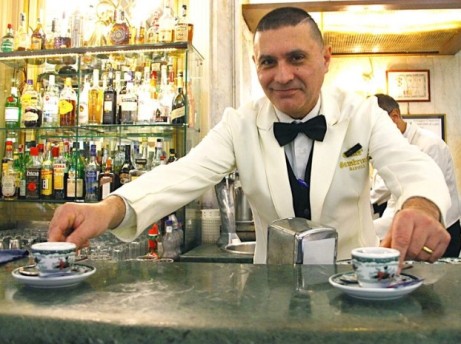
Coffee at The Cafe

Copyright 2016 Daniel Zwicke


Since 1720
But For a PRICE !


My Venice – Author Daniel Bellino Z
.
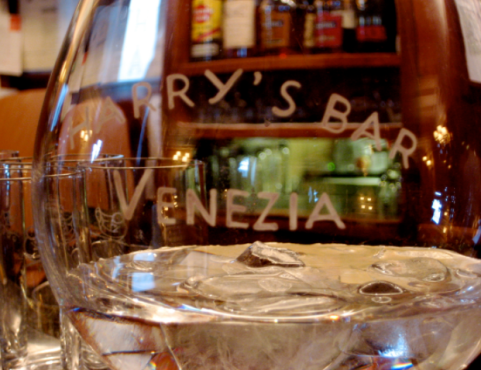
Harry’s Bar
TRAVEL GUIDE / COOKBOOK
.
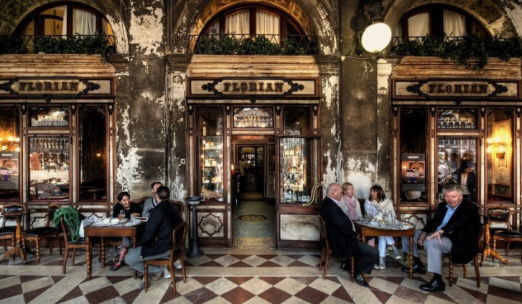
CAFFE FLORIAN
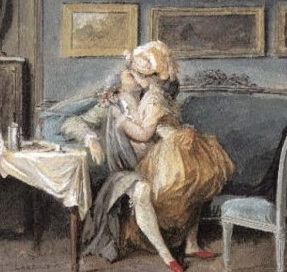
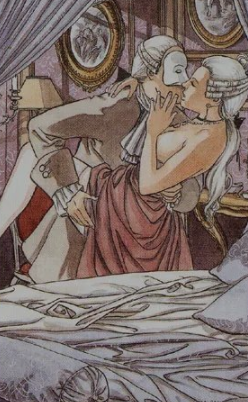
CASANOVA Seduces
Where CASANOVA Often DINED
.

See a VIVALDI CONCERT at The PIETA

BACARI
The WINE BARS of VENICE

.
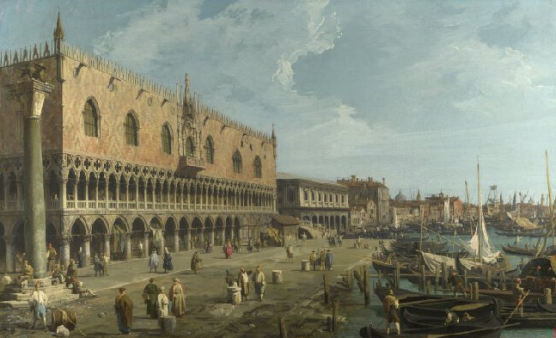
Artists Who Painted VENICE – Canaletto Bellini
Canaletto, celebrated for his views of Venice (vedute), depicts the city’s principal square of San Marco, which was described by Napoleon as “the finest drawing room in Europe.” The Basilica of Saint Mark, with its Byzantine architecture, and the imposing bell tower dominate the scene as symbols of the rich history of the Venetian Republic. Canaletto adjusts for the trapezoidal shape of the piazza by reinforcing the perspective created by the ornamental marble pattern of stone pavement that had recently been laid. This painting represents a timeless view of Venice while also capturing a slice of eighteenth-century daily life.
Among Canaletto’s most important patrons were English aristocrats who visited the city on the Grand Tour, often bringing home as souvenirs contemporary depictions of the cities they visited. This painting was bought by the fourth Duke of Leeds after he visited Venice in 1734. When the duke returned to England, he had the painting placed within this type of Scotch pine frame that he favored for works in his collection.
Bar Cichetti – America First Ever Venetian Wine Bar aka Bacaro – Created by author Daniel Bellino Zwicke in New York City
BAR CICHETTI
The FIRST EVER Venetian Wine Bar in America
Created by Daniel Bellino Zwicke
Chef / Wine Director / Managing Partner
.
.
Author Daniel Bellino-Zwicke on INSTAGRAM
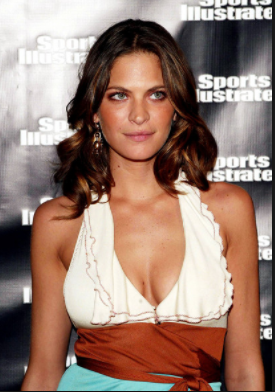
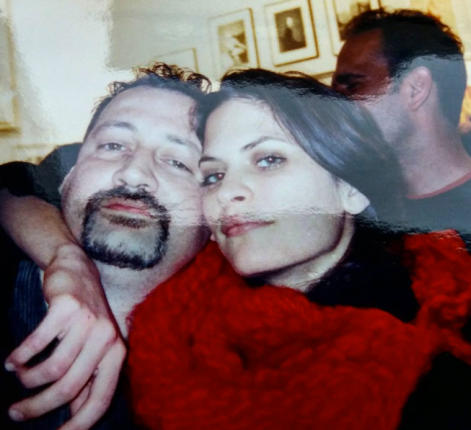
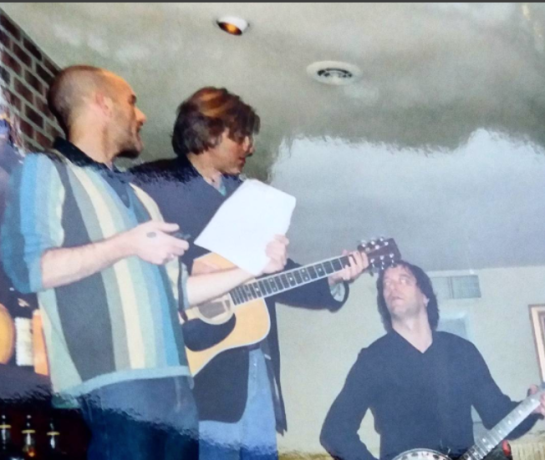
Some of Daniel’s Old Photos of BAR CICHETTI Shows Daniel
with GOOD FRIENDS ; Matt Dillon, John Lurie, Frankie Rayder,
Raoul Marti, and …
.
Frankie Rayder
SPORTS ILLUSTRATED
.
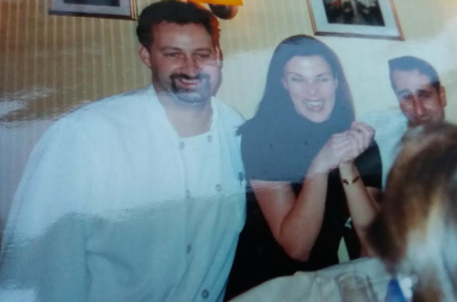
Daniel Bellino Zwicke
with Victoria Secrets Model Frankie Rayder
.
Recipes From My Sicilian Nonna
Daniel Bellino Zwicke
.
.
Daniel with Friends Raoul Marti and Matt Dillon
at Bar Cichetti 1999
.

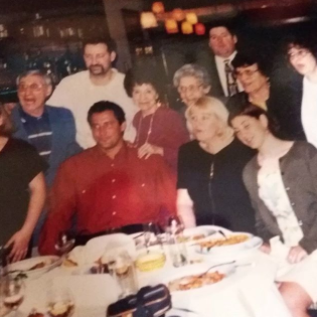
Daniel and Family
THE BELLINO ‘S
Uncle Tony, Cousin Tony Aunt Fran, Daniel, Debbie, Aunt Wanda,
Aunt Hellen, and cousins .. BAR CICHETTI 1998
.
MICHAEL STIPE & REM Band MEMBERS
At BAR CICHETTI
1998
GREENWICH VILLAGE NEW YORK
NOT Losing Their Religion
.
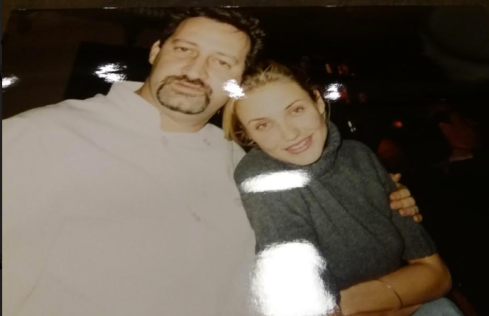
Author Daniel Bellino Zwicke and Cameron Diaz
at Bar Cichetti
.
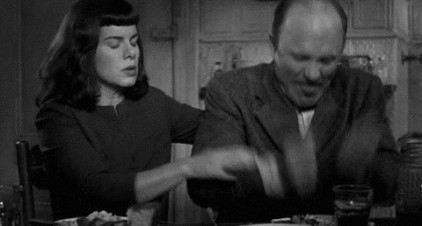
Marisa Tomei was a Regular along with Friends Fischer Stevens
and Rosie Perez , Severio Guerra, John Lurie, Ed Harris, and Debbie Mazur
Ed HARRIS was Seen Eating at BAR CICHETTI
during the Filming of POLLOCK

The 1st time ED HARRIS ate at BARICHETTI
When he was fisnished with his dinner and leaving the restaurant, Ed came over to me thank me and said that he really enjoyed the meal.
“Thanks Ed”
.
ROSIE PEREZ Spotted at BAR CICHETTI
.
.
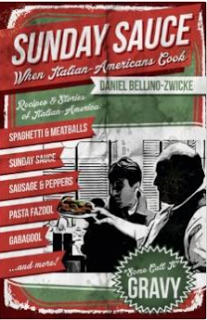
SUNDAY SAUCE
by Daniel Bellino Zwicke
.
.

Chef Daniel Bellino Zwicke and friends Debi Mazur & Sevario Guerra
.
.
.
Daniel Bellino Zwicke in Instagram
.
.
MARISA TOMEI and ROBERT DOWNEY JR.
.
FRANKIE RAYDER / SPORTS ILLUSTRATED
.
ANNABELLA SCIORRA
FISCHER STEVENS
.
Marisa Tomei and Fischer Stevens
My Venice – author Daniel Bellino Zwicke
The DOGES PALACE / SAINT MARKS BASILICA
In WINTER
VENICE , ITALY
HARRY’S BAR
VENICE
.
The HOTEL TIVOLIVENICE
HOTEL IRIS
VENICE
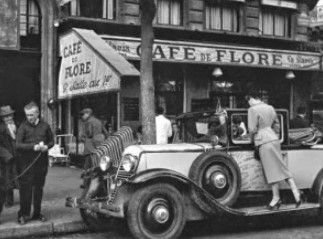
In the fish market area, in Campo delle Beccarie, there is instead Poste Vecie restaurant open since 1500, where Casanova used to hide away with friends and especially girl friends to enjoy luxurious banquets. The whole area of St. Mark’s Square and especially the old premises, starting from Caffè Florian, have been hunting grounds of the great seducer.
.
.
DO MORI
The erotic tour of Venice cannot exclude the Rialto area and in particular the Sotoportego dei Do Mori where in the tavern of the same name Casanova liked giving the first appointment to his ladies. Who showed up strictly masked.
VENETIAN RECIPES
“GOING to POSITANO” ?
The AMALFI COAST ?
.


BACARI
The WINE BARS of VENICE

VEDOVA
.
.
INSIDE The BAR at VEDOVA
BACARO
.
GONDOLA’S with Della SALUTE in Background
The MOLO
VENICE
On The Grand Canal
VENICE , ITALY
Author Daniel Bellino Zwicke
1997

Me & Cousin Joe
Prosseco in a Venetian Wine Bar
Venice, Italy 2003

Me & Arturo
aka “IL LUPO”
IL LUPO The Famus Venetian Gondoliere
Arturo and I are Drinking some Local Italian Wine
At Osteria Vivaldi
VENICE , ITALY
1995
I had read a little article in The New York Times about Venice, that mention the Bacari (Wine Bars) of Venice, and that’s all it took. Just a little mention (one Paragraph) of these particular type of wine bars of Venice sparked my interest, and I just had to go to Venice and find out as much as I could about them, for I instantly felt that I wanted to open one in New York (which I did).
MANGIA ITALIANO
MEMORIES of ITALIAN FOOD
READ ABOUT BAR CICHETTI
VENETIAN WINE BARS
ITALIAN FOOD in VENICE ITALY
and NEW YORK
Books by #DanielBellinoZwicke
.
DO MORI
CICHETTI MISTI
VENENZIA
BACARO
VENICEITALY
At The BAR
MISTI MARE